When people search Google for a nearby service, they often compare several businesses before deciding whom to contact. They may look at customer reviews, photos, business details, available services, and website information to determine which option best meets their needs.
For local businesses, these searches create opportunities to reach potential customers at the moment they are researching or evaluating providers.
However, creating a Google Business Profile does not automatically generate website visits, calls, or enquiries. A profile may contain basic information but still struggle to attract meaningful engagement if its details are incomplete, its services are unclear, or customers cannot easily find the information they need.
Increasing profile traffic requires a combination of accurate business information, relevant content, customer engagement, and ongoing performance analysis. The website connected to the profile also plays an important role by answering customer questions and providing a clear path to the next step.
The goal is not simply to increase the number of profile views. It is to help relevant customers discover a business, understand its services, and decide whether to make contact.
Why Google Business Profile Traffic Matters
A Google Business Profile helps customers discover businesses through Google Search and Maps. They can view services, read reviews, explore photos, visit websites, or make contact.
An optimized Google Business Profile for local SEO helps businesses present accurate information and improve their visibility in relevant local searches.
Google considers relevance, distance, and prominence when determining local search results. Although businesses cannot control every ranking factor, keeping profile information accurate and useful can help customers evaluate their services.
Beyond impressions, businesses should measure meaningful actions, such as website visits, calls, and enquiries, to better understand customer interest.
How to Optimize a Google Business Profile for Better Visibility
A properly maintained profile provides a foundation for local discovery. Rather than adding information indiscriminately, begin by checking whether the existing details accurately represent the business.
Complete Your Business Information
Review your business name, address or service-area information, telephone number, operating hours, website, and business description. Update any outdated details and make sure the information reflects your actual operations.
Choose the primary business category that best describes your main activity. Add secondary categories only when they accurately represent additional services. Categories help Google understand the nature of the business and determine which searches may be relevant.
Your business description should explain what you do, whom you help, and what customers can expect. Clear, specific language is more useful than a list of repeated search terms.
Businesses that travel to customers should also select appropriate service areas. Include locations where you genuinely operate rather than adding unrelated towns in an attempt to appear in more searches.
Keep Services and Operating Hours Accurate
Customers often use business profiles to check whether a particular service is available or whether a business is open. Incorrect hours or vague service information can create confusion and discourage enquiries.
Review your listed services and remove outdated information. If your business offers several distinct services, describe them accurately so customers can understand the differences.
Update special operating hours when necessary, including relevant holiday schedules. Regular checks help ensure that customers receive reliable information when they are deciding whether to visit or contact the business.
Add Genuine Photos and Useful Updates
Photos help customers form an impression of a business before making contact. Depending on the industry, useful images may include the premises, team members, products, completed projects, or examples of work.
Effective Google Business Profile management can help businesses keep their profile content accurate, relevant, and up to date.
Choose clear, authentic images that accurately represent your business. Avoid misleading photographs or generic visuals that do not reflect the actual customer experience.
Business updates can communicate useful information, such as a new service, a recent project, a seasonal offering, or an important announcement. Each update should have a purpose and provide something relevant to potential customers.
There is no need to publish repetitive content simply to maintain a posting schedule. Focus on accuracy, freshness, and customer value.
Turn Profile Visitors Into Website Visits and Enquiries
Improving profile visibility is only one part of attracting customers. Once people discover a business, they need clear reasons to consider it and an easy way to take the next step.
Build Trust Through Genuine Customer Reviews
Reviews provide insight into other customers’ experiences and can influence how potential buyers evaluate a business. Encourage customers to share honest feedback after a genuine interaction or completed project.
Make the process convenient by providing a review link when appropriate. However, avoid offering incentives in exchange for positive reviews, pressuring customers to leave a particular rating, or posting fabricated feedback.
Respond professionally to reviews, including critical ones. Thank customers for their comments, address legitimate concerns, and avoid revealing private information in public responses.
A thoughtful response can demonstrate that a business takes feedback seriously. It also gives prospective customers more context when evaluating the company.
Review management should focus on genuine customer experiences rather than attempting to manipulate ratings.
Make the Website a Useful Next Step
Your website should support the information customers discover through your profile. When someone clicks through, they should find a page that matches the service or information they were looking for.
For example, a customer searching for a specific professional service should ideally reach a relevant service page rather than having to search the entire website again.
A useful landing page explains the service, answers common questions, outlines important considerations, and provides straightforward contact options.
Visitors should be able to find a telephone number, enquiry form, booking option, or other relevant next step without unnecessary effort. Positive customer feedback can also help visitors evaluate a business, so make it easy for satisfied customers to write a Google Review.
If a review violates Google’s policies, businesses can also learn about the process to remove bad reviews from Google My Business.
Mobile usability also matters because many local searches take place on mobile devices. Pages that are difficult to read, slow to load, or confusing to navigate can discourage visitors from continuing.
Simplify the Customer Journey
Small improvements can make the process of contacting a business easier.
- Match the page to the search: Direct visitors to information that addresses their specific needs.
- Make contact convenient: Keep relevant contact details and enquiry options easy to find.
- Set clear expectations: Explain what happens after a customer submits a form or requests information.
These improvements do not guarantee more conversions, but they can reduce unnecessary friction and help visitors make informed decisions.
Use Local Keywords Naturally
Keyword research helps businesses understand the language customers use when searching for products and services. The objective is to identify relevant terms and address the intent behind them, not to repeat the same phrase as often as possible. Accurate business details across online directories and Google Business citations can also support a consistent local search presence.
Start with the services your business genuinely provides. Consider the questions customers ask, the problems they want to solve, and the factors they consider when comparing providers.
Use this information to improve business descriptions, service details, website titles, and relevant landing-page content. Mention locations where they clarify service coverage, but avoid adding long lists of neighborhoods to every paragraph.
Website content can address more detailed questions through practical guides, comparisons, explanations, and frequently asked questions. This allows a business to provide useful information to people who are researching a problem as well as those who are ready to contact a provider.
Each page should have a clear purpose. If several pages target nearly identical terms and answer the same questions, consider whether they offer enough distinct value to justify remaining separate.
Natural language, useful explanations, and accurate service information provide a better foundation than keyword repetition.
Use Analytics to Understand Traffic and Lead Quality
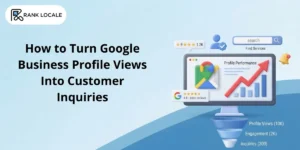
Google Business Profile performance data and website analytics help businesses understand different parts of the customer journey.
Profile performance may show interactions such as calls, website clicks, and direction requests, depending on the available reporting features. Website analytics can provide additional information about landing-page visits, referral sources, form submissions, and other measurable actions.
Review these measurements together to understand where customers engage and where opportunities may be lost.
For example, an increase in profile views without a corresponding increase in website visits may indicate that people are finding the listing but are not choosing to explore further. Website visits without enquiries may suggest that the landing page, service information, or contact process needs attention. These are possible explanations rather than definitive conclusions, so investigate the available evidence before making changes.
Three useful areas to monitor include:
- Visibility: Examine profile impressions and relevant search exposure over time.
- Engagement: Review website clicks, calls, direction requests, and other available profile interactions.
- Business outcomes: Track relevant enquiries, completed forms, bookings, and the quality of leads generated.
Comparing results over time can help identify patterns. Consider seasonal demand, changes in operating hours, website updates, and other factors that may influence performance.
A high volume of visits is not necessarily a sign of success if those visitors are looking for services the business does not provide. The quality and relevance of enquiries matter as much as the number of interactions.
When Google Ads Can Help Increase Website Traffic
Organic local SEO and paid advertising can support the same business goals, but they work differently. What is Local SEO explains how businesses can improve their visibility in relevant unpaid search results. Google Ads, by contrast, can provide paid placement for selected searches while a campaign is active.
Paid advertising may be useful when a business wants to test demand for a particular service, reach a defined audience, or generate additional website traffic within a planned budget.
A campaign should use relevant search terms, clear ad messaging, and landing pages that match what the advertisement promises. Monitoring campaign performance helps businesses identify which searches generate meaningful actions rather than simply producing clicks.
Specific, descriptive search phrases can sometimes help connect an advertisement with a more clearly defined customer need. However, their value depends on the industry, competition, campaign settings, and actual search demand.
Paid advertising should be evaluated separately from organic search performance. Running advertisements does not automatically improve a business’s organic Google Business Profile rankings.
Common Mistakes That Reduce Profile Effectiveness
Several avoidable issues can make it harder for customers to find and evaluate a business.
Incomplete business details may leave customers uncertain about operating hours or available services. Incorrect categories can make the profile less relevant to the business’s actual offering. Poor-quality photographs and outdated information can weaken the overall presentation.
Ignoring customer reviews can also create a poor impression, particularly when people are comparing several providers. Similarly, a website that lacks clear service information or convenient contact options may fail to turn interest into enquiries.
Another mistake is expecting immediate results from every optimization change. Local search performance depends on multiple factors, including competition, distance, relevance, and prominence. No specific update guarantees a higher ranking or a fixed number of leads within a few days.
Instead, identify the most important problems, make changes based on evidence, and review the results over a reasonable period.
A Practical Routine for Maintaining Your Profile
Maintaining an effective profile does not require making unnecessary changes every day. A simple routine can help keep information accurate and reveal opportunities for improvement.
Businesses can also benefit from professional Google Business Profile optimization services to strengthen their local search presence and keep their profiles aligned with their goals.
Regular checks:
- Confirm that operating hours and service information remain accurate.
- Review new customer feedback and respond professionally.
- Add genuine photos or updates when there is something useful to share.
- Check whether contact details and website links work correctly.
Periodic performance reviews:
- Compare profile interactions with website visits and enquiries.
- Identify pages that attract visitors but generate few meaningful actions.
- Review customer questions to identify gaps in service information.
- Update content when services, business operations, or customer needs change.
The right frequency depends on the nature of the business and how often its information changes. The priority is to keep the profile useful and reliable rather than follow a rigid schedule without considering results.
Frequently Asked Questions
How can I increase Google Business Profile traffic?
Keep your business information accurate, choose relevant categories, maintain current service details, add genuine photos, and encourage honest customer reviews. Monitor available performance data to understand which activities help customers discover and engage with your business.
How do I turn profile visitors into leads?
Provide clear service information, accurate contact details, relevant website links, and a straightforward enquiry process. Track calls, form submissions, and other meaningful actions to understand whether your profile is contributing to business opportunities.
Can Google Ads increase website traffic?
Yes. Google Ads can attract paid visitors when campaigns target relevant searches and direct people to appropriate landing pages. Results depend on campaign setup, competition, budget, and website quality. Paid advertising does not automatically improve organic rankings.
Why is my Google Business Profile receiving views but few enquiries?
Possible reasons include a mismatch between the searches and your services, unclear business information, limited trust signals, or a website that makes contacting you difficult. Review the available data and customer journey to identify the most likely cause.
How can I measure whether my local SEO strategy is working?
Monitor relevant search visibility, profile interactions, website visits, enquiries, and lead quality. Compare performance over time and consider seasonal demand or other changes before attributing results to a specific optimization.
Conclusion
A Google Business Profile can play an important role in helping local customers discover and evaluate a business in Denver, Colorado. Its effectiveness depends on more than appearing in search results: customers need accurate information, relevant services, credible reviews, useful visuals, and a convenient way to make contact.
A thoughtful local SEO strategy combines profile maintenance, natural keyword targeting, useful website content, and performance measurement. Paid advertising can provide additional reach when appropriate, while analytics help identify which activities contribute to meaningful business outcomes.
Rank Locale helps businesses in Devor improve their online visibility and strengthen their digital marketing strategies. Rather than focusing on profile views alone, the goal is to attract relevant customers and improve their experience from discovery to enquiry. Regular reviews of business information, customer feedback, website performance, and lead quality can help businesses make better-informed decisions over time.
Contact Rank Locale at +1 302-558-4901 to discuss your local SEO and digital marketing needs in the USA.