Your business may appear in Google Search and Maps regularly, yet the phone remains quiet and your inbox receives few inquiries. This can be frustrating when your Google Business Profile seems to attract attention but does not generate the customer interest you expected.
The problem is not always visibility. People may discover your business without finding enough information to choose you, understand your services, or take the next step. An incomplete profile, unclear service descriptions, outdated contact details, weak trust signals, or a confusing website experience can all create unnecessary barriers.
A well-managed Google Business Profile (GBP) should do more than introduce your business. It should help potential customers understand what you offer, decide whether you meet their needs, and contact you with confidence.
Turning profile views into inquiries requires a combination of accurate business information, useful content, customer trust, and consistent performance tracking. This guide explains how to identify the gaps and improve the journey from discovery to a meaningful business conversation.
Understand What Your Google Business Profile Performance Really Means
Before changing your profile, establish what your existing data tells you. A high number of profile views can indicate visibility, but it does not automatically mean that visitors are ready to contact your business.
Google provides performance information for verified Business Profiles, including views, search terms, website clicks, call-button clicks, and direction requests. Depending on your business and available features, other interactions may also appear. These metrics help you understand how people discover and interact with your listing. <Cite refs={[“turn793772search0″,”turn793772search1”]}/>
For example, a business receiving many views but few website clicks may need to make its services or website link more relevant to searchers. A profile generating website visits but few inquiries may have a different problem, such as unclear service information or a difficult contact process.
Start by reviewing your performance over a consistent period. Compare similar date ranges and look for patterns rather than reacting to one week’s results.
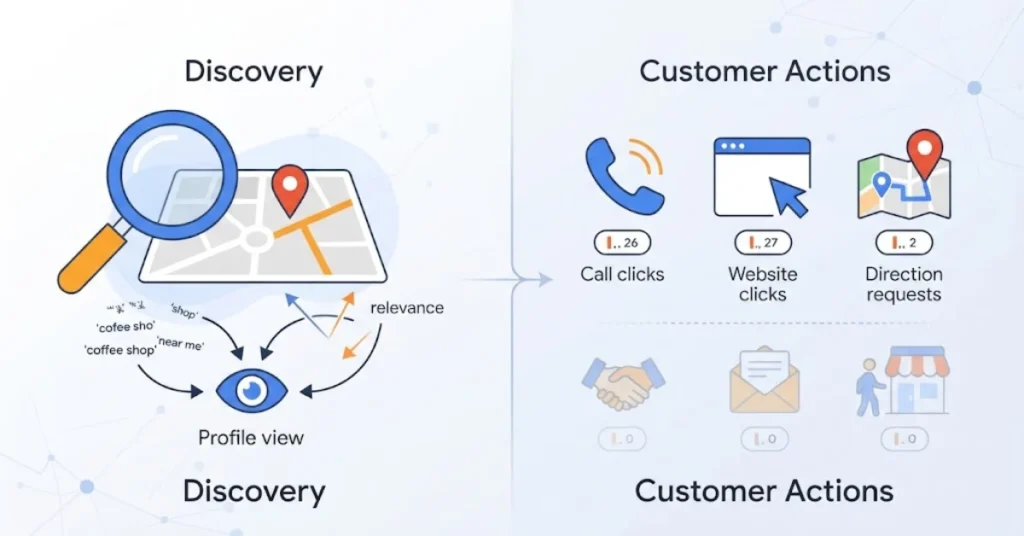
Focus on these two areas:
- Discovery: Review profile views and search terms to understand how people find your business and whether those searches match your services.
- Customer actions: Examine available call clicks, website clicks, and direction requests to see what visitors do after discovering your profile.
Remember that a call-button click is not proof of a completed conversation, and a website click does not confirm that someone submitted a form. Track actual inquiries separately wherever possible.
For official instructions, use Google’s guide to Business Profile performance and insights.
Make Your Profile Answer Customers’ Most Important Questions
People often make quick decisions when comparing local businesses. If your profile leaves basic questions unanswered, potential customers may move to another listing rather than investigate further.
Your business name, primary category, operating hours, contact information, and website should be accurate. Choose categories that genuinely describe your business and add relevant services where the available profile features support them.
Your business description should explain what you do, whom you help, and what customers can expect. Use clear language instead of filling the description with repeated keywords or broad marketing claims.
For example, a web design agency should explain whether it develops business websites, redesigns existing sites, or provides ongoing website support. These details help prospective customers decide whether the business matches their requirements.
Review your profile from a customer’s perspective. Can someone understand your main offering without searching through several pages? Is it clear how to contact you? Are your hours and website link current?
Also, represent your business accurately. Do not add locations where you do not operate, create duplicate profiles to gain exposure, or use misleading business names. Profile accuracy supports a more trustworthy experience and helps avoid unnecessary eligibility problems.
Build Trust Before Asking Visitors to Contact You
A potential customer may find several businesses offering similar services. The decision often depends on whether each business appears reliable, relevant, and capable of delivering the requested work.
Your profile should provide genuine evidence that helps people make an informed choice. Recent, authentic photographs can show your premises, team, completed projects, products, or working environment when appropriate. Service businesses can use relevant project images to demonstrate the type of work they perform.
Customer reviews are another important source of information. Encourage genuine customers to share honest feedback about their experiences, and respond professionally to reviews where appropriate. Answer specific concerns without disclosing private customer information or making promises you cannot support.
Avoid buying reviews, offering incentives in exchange for positive feedback, or posting fabricated testimonials. These practices can undermine credibility and violate platform policies.
Your website should reinforce the same trust. Keep your contact details consistent, explain your services clearly, and include relevant evidence of experience, such as genuine case studies, project examples, or qualifications.
Trust is not created by adding the largest possible number of photos or reviews. It comes from providing accurate, useful information that allows people to assess whether your business is right for them.
Turn Profile Visitors Into Website Inquiries
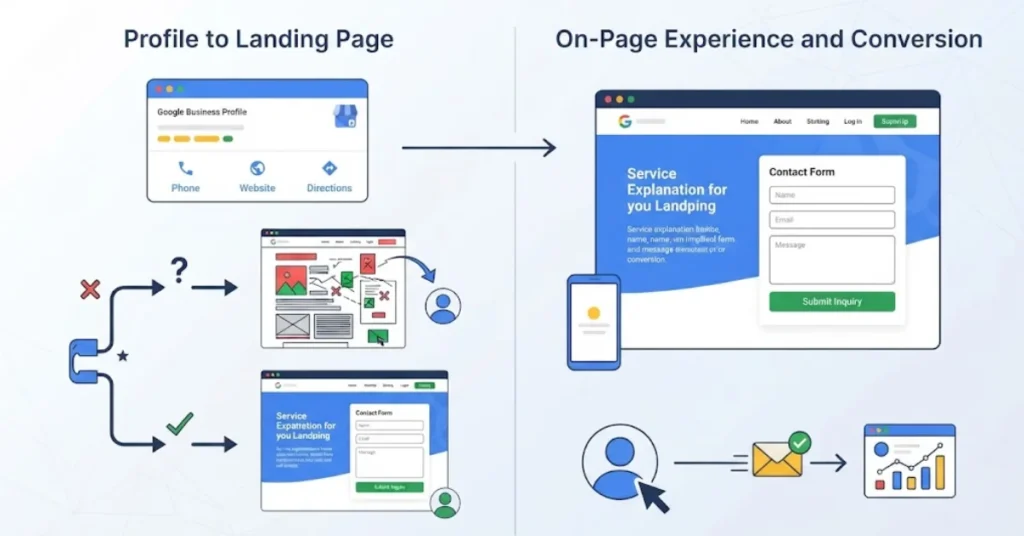
Your Google Business Profile can introduce a potential customer to your company, but your website often provides the detail needed to make a decision. If the profile sends visitors to an irrelevant page or a confusing homepage, some may leave without contacting you.
Choose the website destination carefully. When a specific service is promoted on your profile, link to the most relevant page if the available link options and your business setup support it.
A visitor interested in website development, for example, should not have to search through unrelated content to find that service. If your profile attracts visitors but your business still struggles to gain local visibility, explore our guide on why your business isn’t ranking locally to understand other possible causes and practical solutions.
Once visitors arrive, make the next step obvious. Your page should explain the service, describe who it is for, answer common questions, and provide a clear way to request information.
A practical contact experience includes:
- A visible call or inquiry option that works on mobile and desktop.
- A short, easy-to-complete contact form requesting only necessary information.
- Clear explanations of the next step, such as when and how the business will respond.
Check your website on a phone as well as a desktop computer. Slow loading, broken links, unreadable text, or forms that fail to submit can waste the interest generated by your profile.
If you use analytics, add suitable tracking to website links from your Business Profile. UTM parameters can help distinguish visits from the profile in compatible analytics tools. Keep the tracking consistent and verify that your reporting works correctly.
The objective is not simply to send more people to your website. It is to help the right visitors find relevant information and complete a meaningful action.
Use Relevant Local Content to Attract Better-Fit Customers
Not every person who views your profile is a potential customer. Some may be looking for a different service, searching outside your operating area, or researching a topic without any immediate intention to hire.
Relevant local content helps explain where your business operates and which needs it can address. Your website should describe your actual service coverage, explain important offerings, and answer questions customers commonly ask before contacting you.
For example, a business working with customers in Denver can create useful service information that clarifies the work available, the types of projects it handles, and how customers can request assistance. The page should contain real information rather than repeated place names added solely to attract searches.
Use customer questions to guide your content. If prospective customers frequently ask about service availability, project timelines, pricing factors, or the process for getting started, address those topics clearly where appropriate.
Keep the Google Business Profile and website aligned. If your profile promotes a service that your website barely explains, visitors may be uncertain about whether you can meet their needs.
Do not expect a new page or a profile edit to produce immediate ranking improvements. Local search visibility depends on multiple factors, and publishing more content is not automatically better. Prioritize information that genuinely helps customers evaluate your business.
Improve Local Visibility Without Relying on Shortcuts
Generating inquiries requires reaching relevant searchers, not simply increasing the number of times your profile appears. Google’s published local ranking guidance identifies relevance, distance, and prominence as important considerations. Businesses cannot control every factor, particularly the searcher’s location, but they can improve the accuracy and usefulness of their online presence. <Cite refs={[“turn793772search0″,”turn793772search2”]}/>
Start by checking whether your profile represents your real business accurately and whether your website clearly explains its services. Review important business listings for outdated contact information, correct significant errors, and maintain a credible online presence.
Where appropriate, build relationships that can earn genuine local mentions and links. Useful partnerships, relevant industry participation, and community involvement can support reputation when they reflect real business activity.
Avoid shortcuts such as keyword-stuffed business names, fake locations, duplicate listings, purchased reviews, or mass submissions to low-quality directories. These tactics do not provide a reliable foundation for lasting visibility.
A professional local SEO review can help determine whether the main issue is poor search relevance, limited visibility, an unhelpful profile, or a website that fails to convert visitors. Address the actual problem rather than making unrelated changes in the hope of gaining more calls.
Measure Which Improvements Generate Real Inquiries
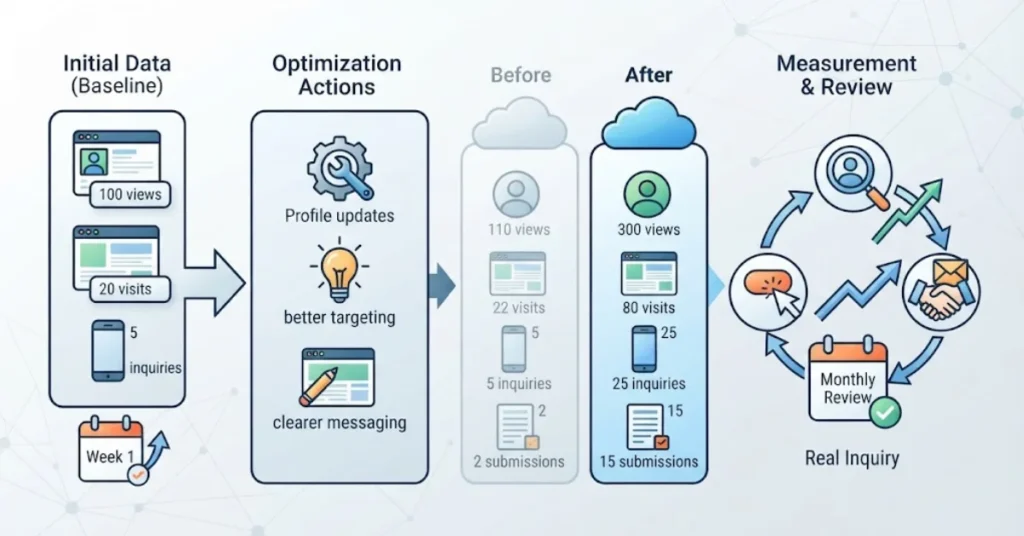
A profile optimization project should be evaluated by its effect on meaningful customer actions, not views alone. Without a clear measurement process, it is difficult to know whether changes are helping.
Establish a baseline before making substantial updates. Record the available profile performance metrics, website visits, phone inquiries, form submissions, and qualified leads. Then compare similar periods after implementing improvements.
Consider the full customer journey. If profile views increase but calls and website clicks remain unchanged, review whether your profile attracts the right searches and communicates your offering clearly.
If website clicks rise but inquiries do not, investigate the landing page, contact process, service information, and form performance. Learn more in our guide to why local SEO rankings drop outside your business area.
Where possible, ask new customers how they discovered your business. This can provide useful context that platform metrics alone may not reveal.
Create a simple monthly review covering three questions:
- Are the right people discovering the business?
- Are more visitors taking relevant actions?
- Are those actions producing genuine inquiries and suitable leads?
Use the answers to prioritize your next improvements. Avoid judging success on a single week of data, especially when inquiry volume is low or demand changes seasonally.