Your website may attract visitors but still fail to bring in new customers. This can happen when people cannot find the right service, trust your business, or contact you easily.
Getting more traffic will not fix every problem. You may need better service pages, clearer contact details, or stronger proof of your work. Without these changes, potential customers may choose another business.
Local SEO helps people find relevant services through search engines and Google Maps. The aim is to reach people who need your services and make it easy for them to take the next step.
For businesses across the USA, a strong local SEO plan should connect customer needs with useful pages and clear business details. This helps turn local searches into real business opportunities.
Find Out Why Visitors Do Not Become Customers
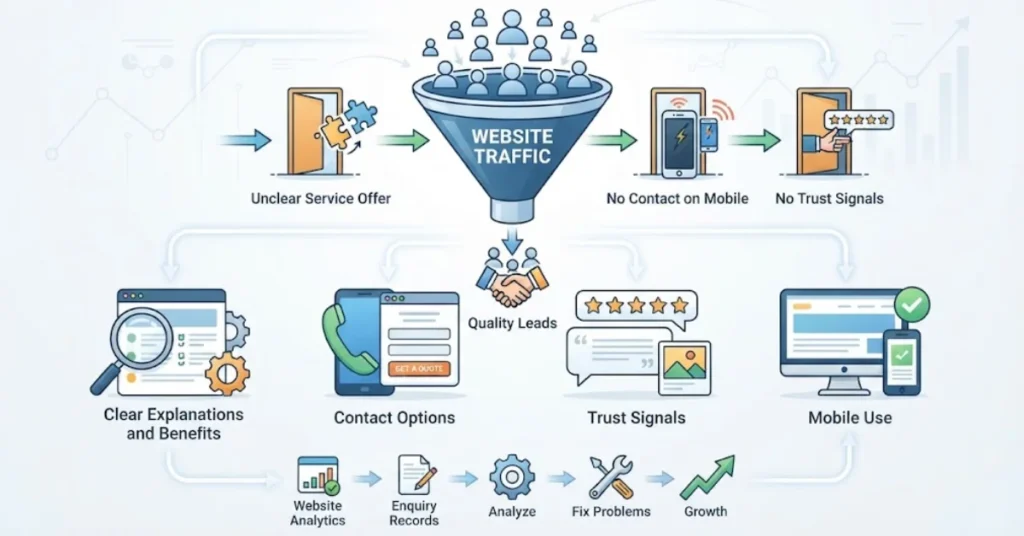
Before spending more on SEO, find out why visitors leave your website without making contact. More traffic will not help if your website fails to answer basic questions.
Start with your main service pages. Check whether they explain what you offer, who needs the service, and how customers can get help. Make sure visitors can find your contact details without extra effort.
For example, an electrician may get visits to a general services page. A customer with a faulty circuit breaker needs more specific details. A dedicated repair page can explain the service and show how to request help.
The same problem affects marketing agencies, builders, and other service providers. Visitors may leave when they cannot understand the offer or judge whether the business meets their needs.
Review these key areas:
- Service details: Does each page explain the service in plain language?
- Contact options: Can visitors call or request a quote easily?
- Trust: Can customers check your reviews, experience, or past work?
- Mobile use: Can people read and use your website on a phone?
Use website analytics and enquiry records to find weak points. Focus on pages that get visits but produce few useful leads. Fix the biggest problems before paying for more traffic.
Match Your Content to Customer Needs
People search for different reasons. Some want to learn about a problem. Others are comparing providers and are ready to buy.
Your website should answer both types of searches. However, each page needs a clear purpose.
An advice article can explain a common problem or compare possible solutions. A service page should explain your offer, your process, and how to contact your business.
For example, a person searching for local SEO advice may want to learn the basics. A person looking for a local SEO professional may want help with a website or Google Business Profile.
Create pages that answer the questions customers ask before they buy:
- What does the service include?
- When should I hire a professional?
- What affects the price?
- How does the process work?
- How can I compare service providers?
Use the answers to build useful website content. Avoid creating many pages that repeat the same information with small changes. This adds little value for customers and can make your site harder to manage.
Give each page a clear topic. Link related pages when they help readers find more information. Keep the writing direct and useful.
Your goal is to help customers make informed choices. Do not add keywords just to make a page appear more relevant. Write for the person who needs the service.
Help Nearby Customers Find Your Business
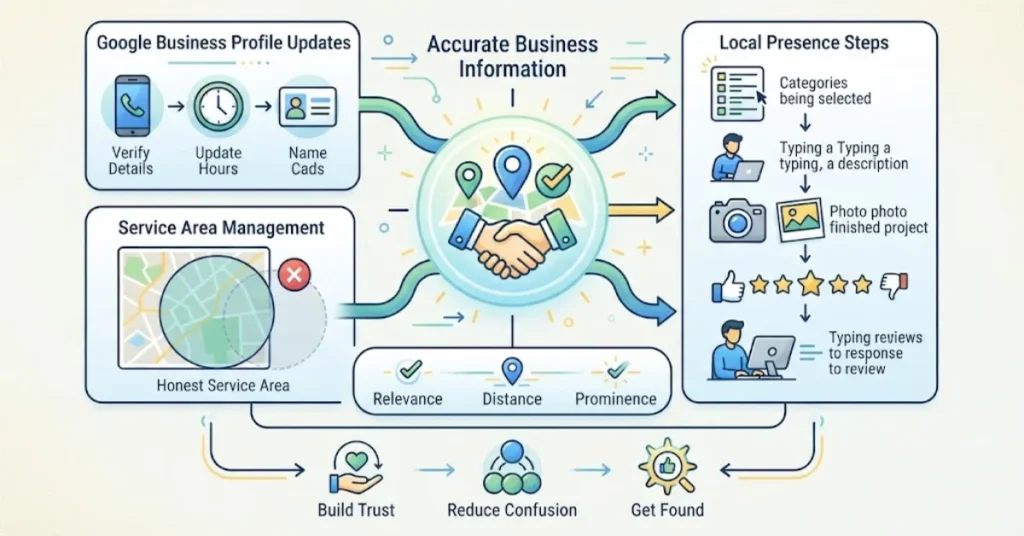
People need accurate information before they contact a local business. If your website and business listing show unclear or outdated details, they may choose another provider.
Keep your Google Business Profile up to date. Check your business name, phone number, opening hours, categories, and service details. Make sure the information matches your actual business.
If you travel to customers, describe your service area honestly. Do not list places you do not serve or use an address where your business does not operate.
Your website can also explain the areas you cover. Create a location page when you have useful details to share about your work in that area. Avoid making dozens of pages that only change the city name.
Google Maps results depend on several factors, including relevance, distance, and prominence. You can improve your business information, but you cannot control every result shown to each searcher.
Use these simple steps to improve your local presence:
- Choose business categories that match your services.
- Write a clear and accurate business description.
- Add genuine photos of your work when suitable.
- Ask real customers for honest reviews.
- Reply to reviews in a professional manner.
These steps help people understand your business before they make contact. They also reduce confusion about your services and location.
Fix Website Issues Before Increasing Your Budget
Some businesses spend more on marketing while basic website problems remain unfixed. This can bring more visitors without increasing enquiries.
A technical SEO check can reveal issues that affect search engines and website users. Common problems include broken links, slow pages, poor mobile layouts, and pages that search engines cannot index.
Not every issue needs urgent action. Start with problems that affect important service pages or stop customers from contacting you.
For example, a broken enquiry form can cost you potential leads. A service page that cannot appear in search results may also need attention. Adding more content will not fix either problem.
You can begin with tools such as Google Search Console. It can show which pages appear in search and help identify some indexing problems. Website analytics can also show how people use your pages.
Paid local SEO software may help with rank tracking, competitor research, and technical checks. However, you do not need every tool on the market. Choose tools that answer real questions about your website.
Review the findings and set clear priorities. Fix the most important issues first, then measure the effect. This helps you spend your budget on work that supports your business goals.
Make It Easy for Customers to Contact You
A visitor may find the right service but leave if the next step is unclear. Your website should make contact simple.
Choose one main action for each service page. You might ask visitors to request a quote, book a consultation, or call your business. Use clear wording so people know what will happen next.
Keep contact forms short. Ask only for details you need to respond to the enquiry. Long forms can discourage people who are still comparing providers.
Trust is also important. Customers want to know whether your business can meet their needs. Share genuine reviews, relevant qualifications, examples of your work, and a clear explanation of your process.
Avoid claims you cannot prove. Promises of instant results or guaranteed Google rankings can mislead customers. Clear information helps people make better decisions.
Test your website from a customer’s point of view:
- Open important pages on a mobile phone.
- Check that phone links and forms work.
- Make sure enquiry messages reach the right person.
- Review the information customers must provide.
- Track calls, forms, and relevant bookings.
These checks help you find problems before they cost you more leads. They also make it easier to see whether your website supports your sales process.
Decide When to Hire an SEO Professional
You may be able to handle basic SEO tasks yourself. However, you may need expert help if your website has technical issues or your marketing is not producing useful enquiries.
A good local SEO professional should first review your business, website, services, and target customers. Their plan should address your actual problems rather than rely on a fixed package.
Before hiring an agency, ask what work it will complete and how it will measure progress. Find out how often you will receive reports and whether you will keep access to your website and business listings.
Be cautious of companies that promise a number-one Google ranking. No provider can control every search result or guarantee a fixed position. Rankings can change based on competition, location, and other factors.
Look for clear advice and realistic goals. The agency should explain what needs work, why it matters, and how results will be checked.
Compare providers based on their process, communication, and understanding of your business. The cheapest option may not meet your needs, while a costly package may include work you do not need.
Choose a provider that can explain its recommendations in plain language. You should understand what you are paying for and how the work supports your business goals.
Measure Leads Instead of Traffic Alone
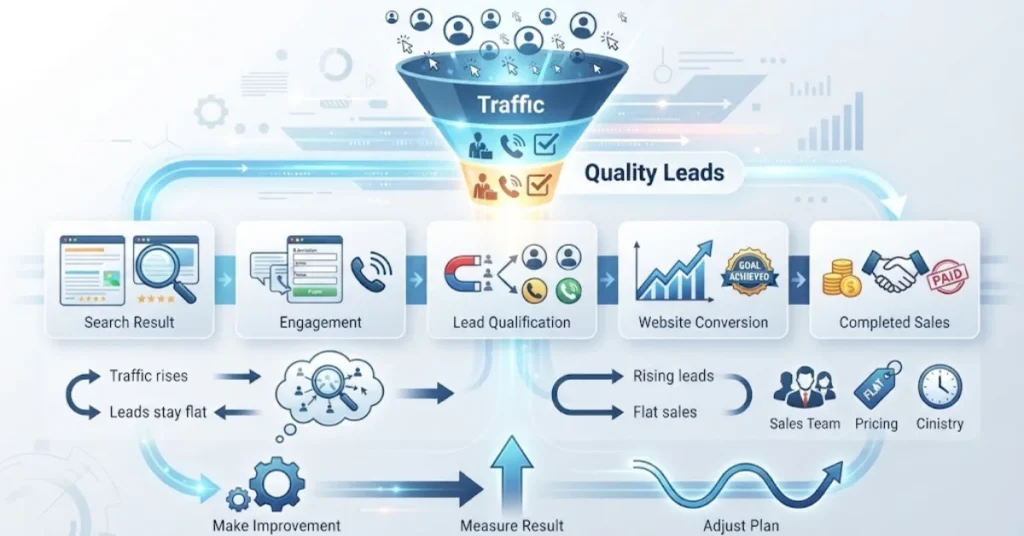
Website traffic and search rankings are useful measures. However, they do not show the full value of your SEO work.
A page may attract many visitors but generate few enquiries. Another page may receive fewer visits but bring in customers who need your service. This is why you should measure more than clicks.
Track these results:
- Search visibility: Are important service pages appearing for relevant searches?
- Enquiries: Are people calling, booking, or submitting forms?
- Lead quality: Do enquiries match the services you provide?
- Conversions: How many visitors take the action you want?
- Sales: Do enquiries lead to paid work?
Google Search Console can show search impressions, clicks, and queries. Website analytics can help you review visitor activity. Your enquiry records can show which leads become customers.
Review results over time rather than reacting to every small change. SEO progress depends on your starting point, competition, website condition, and the work completed.
If traffic rises but enquiries stay low, review the pages and search terms bringing visitors. If enquiries rise but sales do not, check lead quality, pricing, response times, and your sales process.
Use what you learn to decide your next step. Make one clear improvement, measure the result, and adjust your plan when needed.