When someone searches Google for a dentist, they are usually looking for more than a name and phone number. They want to know whether the practice offers the treatment they need, whether it is nearby and whether they can trust the people providing care.
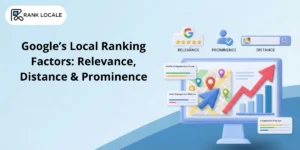
That makes local visibility especially important for dental practices. A strong website alone does not automatically make a practice prominent in local search. Google considers factors such as relevance, distance and prominence when determining local results.
The good news is that dental practices can improve how clearly they present their services, expertise, location and patient information online.
Here are ten practical SEO improvements that can help create a stronger local search presence without turning your website into a collection of keywords.
1. Give Your Treatments a Clear Search Focus
A common problem with dental websites is putting too much information on one general services page.
A patient searching for dental implants has different questions from someone looking for an emergency appointment or routine cleaning. If every treatment receives only a short mention, the website may not provide enough useful information about any particular service.
Important treatments should have pages that clearly explain what the service involves, who it may be suitable for, what patients can expect, and which questions commonly arise.
This is a basic principle of seo for dental practices because it connects individual services with the needs behind specific searches.
That does not mean creating dozens of thin pages. A page should exist because the treatment is genuinely offered and deserves useful, substantial information.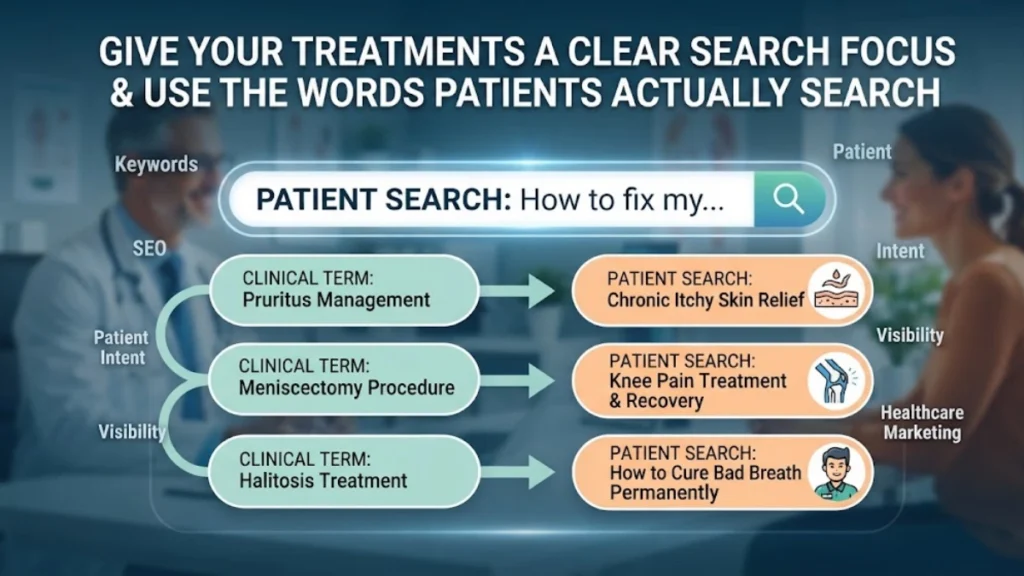
2. Use the Words Patients Actually Search
Dentists and patients do not always describe the same problem in the same way.
A dentist may use a clinical term, while a patient may search for something much simpler. Someone might search for “tooth pain dentist” without knowing what treatment they need.
This difference matters when developing content.
Look at the questions your reception team hears. Think about what patients ask before booking. Notice the way they describe symptoms, treatments, concerns, and appointments.
Those conversations can reveal better content ideas than simply collecting large lists of keywords.
Good seo tips for dentists start with understanding the person behind the search. Google also recommends creating useful content for people rather than writing primarily to manipulate search rankings.
Use search language naturally, but let clarity come first.
3. Make Your Location Useful, Not Repetitive
Local SEO is not simply a matter of placing a city name on every page.
Patients need practical location information. They may want to know where the office is, which communities it serves, how to reach it, and whether the location is convenient for them.
This gives location a real purpose on the website.
For practices serving several communities, avoid producing almost identical pages with only the location name changed. Instead, create location information when there is something genuinely useful to say.
Google identifies distance as one of the main considerations in local search, along with relevance and prominence.
A sensible dental local seo strategy therefore combines geographic relevance with useful information rather than repeated location phrases.
4. Strengthen the First Impression in Google
For many potential patients, your website is not the first thing they see.
They may discover the practice through Google Search or Maps and make an initial judgment from the information displayed there.
Your Google Business Profile should accurately represent the practice. Business details, hours, services, categories, photos, and other important information should be kept current.
Google recommends maintaining complete and accurate Business Profile information and explains that local results are influenced by relevance, distance, and prominence.
Think about the profile from the patient’s point of view.
If someone finds the practice without visiting the website, can they quickly understand what the practice offers and how to contact it?
A profile that answers those basic questions creates a better first interaction.
5. Answer Questions Before Patients Call
A useful dental website should not only describe treatments. It should also help patients understand them.
People often search before they are ready to schedule an appointment. They may want to understand a procedure, prepare for a visit, compare treatment options, or know what questions to ask their dentist.
These situations create natural opportunities for helpful content.
Instead of publishing generic articles because they contain popular keywords, build resources around genuine patient questions.
For example, a practice could explain what happens during a particular consultation, discuss common considerations before treatment, or answer questions the dental team hears regularly.
This approach supports dental seo tips that are useful beyond rankings. The content can become part of the patient’s decision-making process.
For healthcare content, accuracy matters particularly strongly. Information should be written responsibly and should not present general educational material as a substitute for individual professional advice.
6. Show the Expertise Behind Your Practice
Patients want to know who is behind the practice.
A website can make genuine expertise easier to understand by providing useful information about the dentists and clinical team. Relevant qualifications, experience, professional interests, treatment areas, and other appropriate details can help establish context.
This is more meaningful than adding a generic statement about being “experienced.”
The same principle applies to treatment content. Explain procedures clearly and demonstrate knowledge through accurate, practical information.
This is where advanced seo for dentists should not be reduced to technical tricks. Strong dental SEO also depends on the quality and credibility of the information presented to patients.
Google’s guidance encourages people-first content that demonstrates appropriate expertise and provides useful information for the intended audience.
Real expertise should be visible because it exists not manufactured for search engines.
7. Learn From What Patients Say
Reviews provide more than a star rating.
Read them for patterns.
Patients may repeatedly mention clear explanations, friendly communication, convenience, professionalism, or a particular treatment experience. Those observations can reveal what people value about the practice.
Negative feedback can be informative too. It may highlight communication problems, confusing expectations, or parts of the patient experience that need attention.
Reviews can therefore become a form of customer research.
Google notes that reviews can contribute to prominence in local search.
But the goal should not be collecting reviews through artificial or manipulative methods.
Encourage genuine feedback, respond appropriately, and use what patients say to understand how the practice is perceived.
That insight can even influence website content. If patients repeatedly ask the same question, perhaps the website should answer it.
8. Make Your Local Presence Consistent
Your dental practice exists online in more places than its own website.
Potential patients may encounter the practice through healthcare directories, professional organizations, local resources, social profiles, or other legitimate references.
Important business details should be accurate and consistent wherever the practice maintains a genuine presence.
Google explains that business information can come from several sources across the web, including websites, third-party information, users, and Business Profiles.
This does not mean submitting the practice to every directory available.
Focus on places that make sense for the business and its audience.
For practices investing in dental local search engine marketing services, this broader view is important because local visibility is not created by one website element alone.
9. Find the Searches Other Practices Miss
Competitor research can be useful without turning your website into a copy of another dental practice.
Start by searching for important treatments and patient problems. Notice which practices appear repeatedly and what information their pages provide.
Then look for the gaps.
Maybe competing websites explain a treatment but do not answer common preparation questions. Perhaps they focus heavily on procedures but provide little information about choosing between options. Or maybe several practices cover broad dental topics while specific patient concerns remain poorly explained.
Those gaps can become content opportunities.
This is a more useful approach to seo marketing for dentists than simply copying competitor keywords.
The objective is to discover where patients need better information and then provide it through your own expertise.
10. Measure Visibility That Actually Matters
SEO reports often focus heavily on ranking positions.
Rankings are useful, but they are not the whole story.
A dental practice should also consider whether people are finding the services that matter, whether visitors engage with treatment pages, and whether search traffic leads to meaningful actions such as calls or appointment requests.
The most useful measurements will depend on the practice.
A general dentist may care about visibility across several core services. A specialist practice may focus more heavily on specific treatment searches. A multi-location organization may need to understand visibility separately for each office.
The point is to connect search activity with actual business goals.
A ranking that attracts the wrong audience is less useful than visibility for searches closely connected with the services the practice provides.
What to Review Before Publishing More Content
More content is not automatically better.
Before adding another dental article, ask whether the subject provides something useful that your current website does not already offer. Check whether it supports a real patient question, connects naturally with a service, and adds information based on reliable knowledge.
A simple review can include:
- whether the topic matches genuine patient intent;
- whether another existing page already answers the same question;
- whether the information can be supported accurately;
- whether the page has a clear purpose for visitors;
- whether it fits naturally into the site’s existing structure.
This keeps content focused and reduces unnecessary duplication.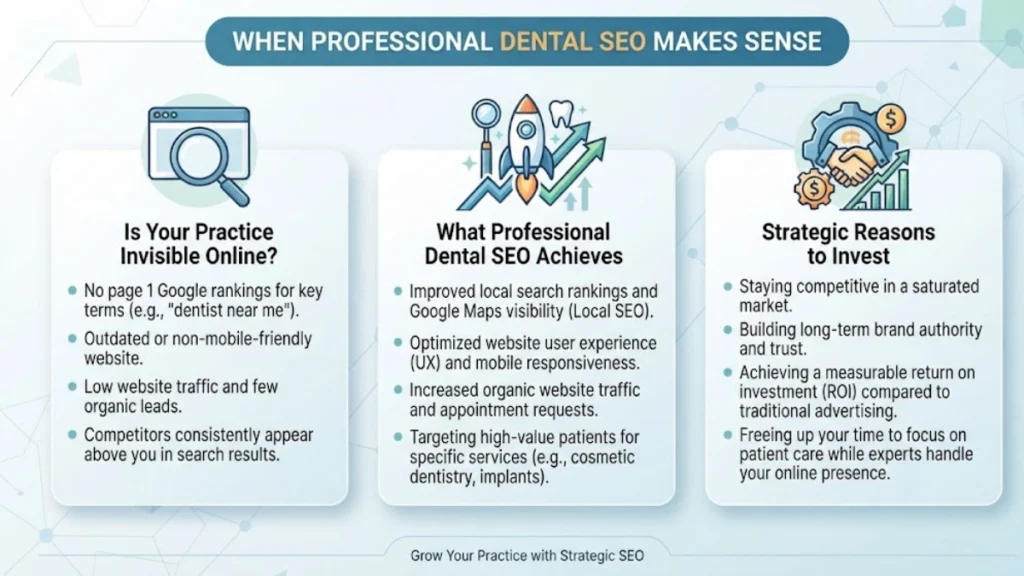
When Professional Dental SEO Makes Sense
Many foundational improvements can be handled by a practice internally. Updating business information, improving service pages, answering patient questions, and keeping the website useful are reasonable places to begin.
Professional support can become valuable when competition is strong or when a practice has multiple services, locations, technical problems, or limited time to manage ongoing SEO.
When evaluating a provider, look beyond promises about rankings.
Ask how the company researches the market, how it determines priorities, what it measures, and how its recommendations relate to the practice’s actual patients.
Terms such as dental local seo marketing services can describe a broad range of work, so the quality of the strategy matters more than the label.
A responsible provider should also set realistic expectations. No SEO company can guarantee a specific Google ranking, Maps position, traffic level, or number of patients.
A Simple Dental SEO Check
Before investing heavily in additional SEO work, review the basics from a patient’s perspective:
- Can someone quickly understand which treatments you provide?
- Is your location and contact information accurate?
- Does your Google Business Profile represent the practice correctly?
- Does the website answer real patient questions?
- Can visitors easily learn about the dentists and their expertise?
- Are important service pages genuinely useful?
- Do your local business details remain consistent across relevant sources?
These questions can reveal more than a long technical checklist.