When people search for a local business, they are usually trying to solve a specific problem. They may need a service, want to compare their options, check whether a company serves their area, or simply find a business they can trust.
That makes local SEO more than a ranking exercise. A business needs to be visible when customers search, but it also needs to provide the information those customers expect to find.
AI is making parts of this process easier. It can help businesses understand search behavior, organize customer questions, identify content gaps, review website information and make SEO data easier to interpret. For small businesses in Denver, the real value comes from using AI to better understand customers rather than using it simply to produce more content.
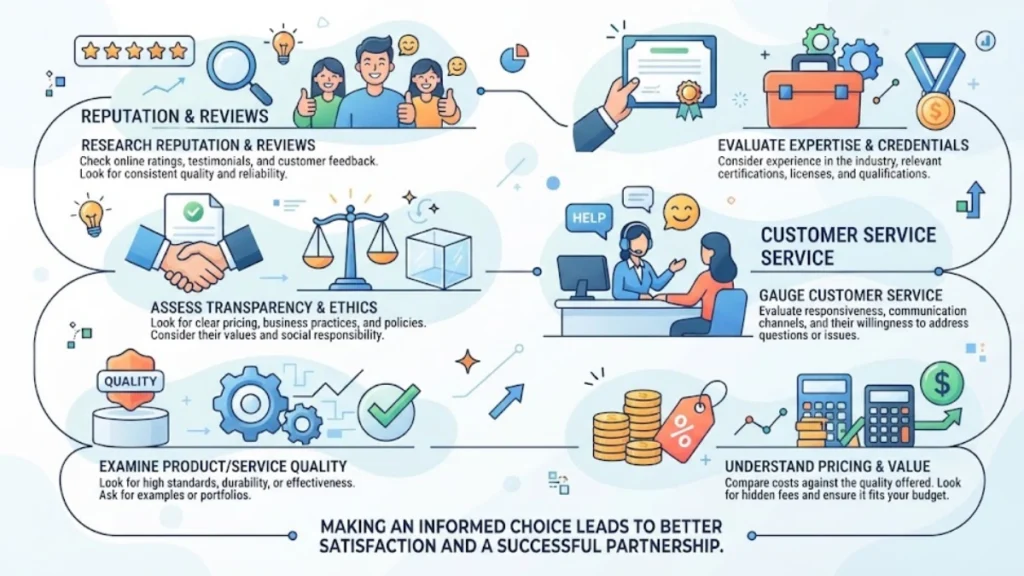
What Customers Need to Know Before Choosing a Business
A customer rarely decides to contact a local company based on its name appearing in search results alone.
Before taking action, they may want answers to several basic questions:
- Does the business provide the service I need?
- Does it serve my location?
- Can I trust the company?
- What does the service include?
- What does the process involve?
- What factors affect the price?
- How quickly can I get help?
- What do other customers say?
- How can I contact the business?
These questions can appear across Google Search, Maps, websites, reviews, and other online sources.
This is why a strong local presence needs more than a business name and phone number. Customers need enough relevant information to understand the company and decide whether it is suitable for their situation.
AI can help businesses organize these customer needs and identify which information is missing or difficult to find.
What Customers Actually Search When They Need Help
People do not always search for a business using the exact service name.
Their search often begins with a problem, then becomes more specific as they move closer to making a decision.
For example, someone looking for an HVAC service might search:
- Why is my AC not cooling?
- Then:
- AC repair
- Then:
- AC repair near me
- And eventually:
- AC repair company in Denver or AC repair cost.
Each search represents a different stage of the customer’s decision.
This is important for AI SEO in Denver because AI can help identify relationships between different searches instead of looking at individual keywords in isolation.
A business can then understand whether its website answers the early questions, explains the relevant service, addresses local intent, and provides enough information for someone who is ready to contact the company.
The objective is not to create a separate page for every possible search. It is to understand the customer’s journey and provide useful information at the right points.
Turning Customer Questions Into Better Website Content
Once a business understands what customers are looking for, the next step is making those answers easy to find.
A service page should explain the actual service instead of simply repeating a target keyword. Helpful supporting information can include how the service works, who needs it, what is involved, common questions, service areas and factors that may affect pricing.
For example, a customer searching for a local repair service may want to know whether the company handles emergency calls, what types of problems it addresses, whether it serves their neighborhood, and what they should expect when they contact the business.
AI can help uncover these questions by analyzing search queries, existing website content, customer feedback, and related topics.
It can also help identify pages that may need clearer explanations.
However, the business should provide and verify the actual information. AI should assist the research process rather than inventing services, prices, qualifications, or customer experiences.
This approach also makes content more natural. Instead of forcing phrases such as Denver SEO company or SEO marketing Denver into every paragraph, the website can focus on answering genuine questions.
Finding Opportunities Hidden in Your Existing Data
Many small businesses already have useful SEO information but do not have the time to examine it closely.
Search Console data, website analytics, reviews, customer inquiries, and existing pages can reveal what people are interested in and where the website may be falling short.
AI can help organize this information and highlight patterns.
For example, a business might discover that:
- A service receives search impressions but has a weak or incomplete page.
- Customers repeatedly ask questions that the website does not answer.
- Several searches relate to a service that receives little attention on the site.
- A page attracts visitors but does not clearly guide them toward the next step.
- Reviews reveal common customer concerns that could be addressed through better website information.
These findings can help a business prioritize its SEO work.
Instead of publishing content simply to increase the number of pages, the business can concentrate on information that addresses an identifiable customer need.
When Customers Cannot Find What They Need
Sometimes a business has good services and useful information but still struggles with local visibility.
The problem may be hidden in the website structure, local information, content, technical setup, or the way important services are presented.
A local SEO audit can help uncover these issues.
The review should look at the complete customer path rather than focusing on one ranking factor. It may examine important service pages, search queries, website structure, local business information, internal links, reviews, technical issues, and local Maps visibility.
AI can make this process more efficient by organizing large amounts of information and identifying areas that deserve further investigation.
But an automated list of problems is not the same as a strategy. An SEO professional still needs to determine which issues are important, which can wait, and which changes are realistic for the business.
Making Local Search Information Easier to Trust
Finding a business is only the first step. Customers also need confidence that the information they see is accurate.
Business name, location, phone number, hours, services, and other important details should be consistent and current across relevant online platforms.
The same applies to Google Business Profile information.
If a customer sees one set of business details in one place and different information somewhere else, uncertainty can follow.
AI can help businesses review information and identify inconsistencies that need attention. It can also help organize customer reviews and identify recurring themes.
However, businesses should always verify important information before making changes.
For local Maps SEO, the goal should not be to manipulate the system with unnecessary keywords. The goal is to make the business information accurate, relevant, and useful to people looking for the service.
Measuring Whether Customers Are Finding the Right PagesSEO reporting becomes more useful when it connects search activity with customer needs.
A local SEO report should not simply contain a collection of ranking numbers. It should help a business understand what people are finding, which services are attracting attention, and where opportunities remain.
AI can help organize data from different sources and make patterns easier to understand.
For example, a business may want to know:
- Which services are receiving search interest?
- Which pages are attracting visitors?
- What questions are bringing people to the website?
- Which searches are becoming more relevant?
- Where are customers leaving without taking action?
- Which pages should be improved next?
This gives a small business a clearer basis for deciding where to spend its SEO resources.
The purpose of reporting should be to support better decisions, not overwhelm the business owner with metrics that have little connection to their goals.
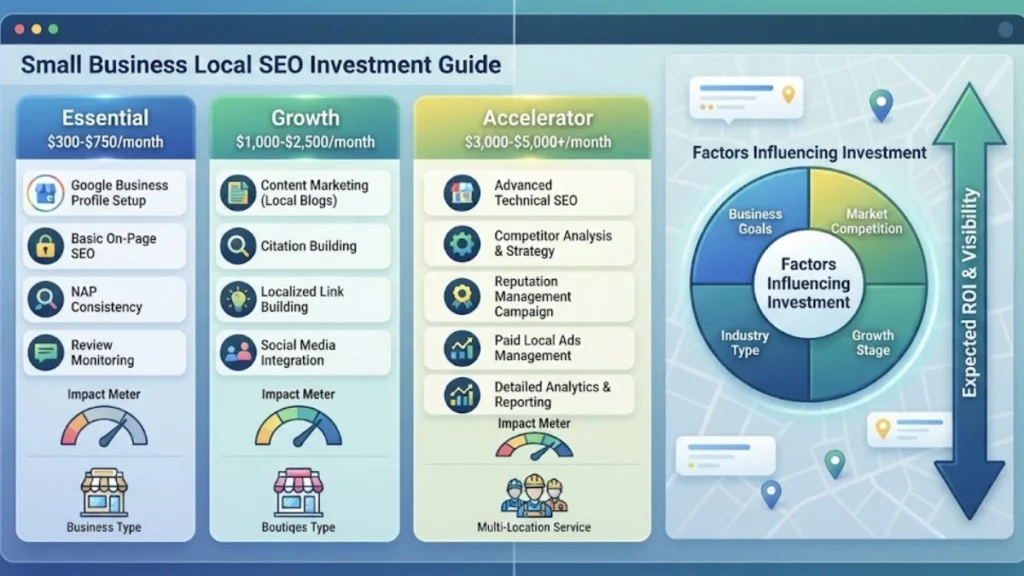
How Much Should a Small Business Invest in Local SEO?
There is no single local SEO cost that makes sense for every business.
A company operating in a competitive market may require more work than a business serving a smaller area. The condition of the website, number of services, competition, existing online presence, and business goals can all affect the amount of work involved.
This is why businesses should evaluate SEO services for local business based on the work being recommended rather than choosing a package simply because it is cheaper.
- A practical strategy should explain:
- What needs improvement?
- Why does it matter?
- What will be changed?
- How will progress be measured?
- What should be prioritized first?
Businesses considering a Denver SEO agency, Denver SEO company, or an AI SEO company in Denver should also ask how AI is being used.
AI can support research, analysis, content planning, and reporting. It should not be presented as a shortcut that automatically produces better rankings.
Choosing an SEO Approach That Fits the Business
The right SEO approach depends on the business itself.
A company with an established website may need better service pages and stronger local relevance. Another business may first need to address technical problems or inconsistent information. A newer company may need to build a useful online presence from the ground up.
That is why choosing an agency for local SEO in Denver should involve more than asking whether the provider uses AI.
Look for a process that understands the business, its customers, services, competition, and service area. Recommendations should be explainable, information should be verified, and reporting should make the work understandable.
AI can make parts of SEO faster, but human experience remains important when deciding what the business should actually do.