A local landing page has a harder job than simply attracting a visitor.It needs to tell people what you offer, where you offer it, why they should trust you and what they should do next.
If any of those answers are missing, a page can receive search traffic without producing many enquiries.
There is also a common mistake with local pages: creating dozens of city URLs and changing only the location name. That may increase the number of pages on a website, but it doesn’t necessarily create useful search results for customers.
The better approach is to build each page around a real service, a genuine location, and the questions people have before contacting a business.
Research from several established marketing resources similarly emphasizes clear messaging, search relevance, conversion elements, trust signals, usability, and testing. Here are 12 practical ways to build better local landing pages.
Start With One Clear Customer Need
Before writing anything, decide what the page is supposed to help someone accomplish.
A page targeting emergency plumbing in Denver should not become a general guide to every plumbing service the company provides. Its purpose should remain focused on people looking for emergency plumbing in that market.
This simple decision influences the headline, copy, images, internal links, and CTA.
Good landing page strategies begin with customer intent rather than a list of keywords. Ask what the visitor wants, what information they need, and what would make them comfortable contacting the business.
Give the Location a Genuine Reason to Be There
A city name alone doesn’t make a page local.
If you’re creating location landing pages, the content should explain something genuinely relevant to customers in that area. That could include the services available there, common customer needs, local project experience, or details about how the business serves the community.
This also prevents the website from becoming a collection of nearly identical pages.
Each page should have its own purpose and enough useful information to stand on its own.
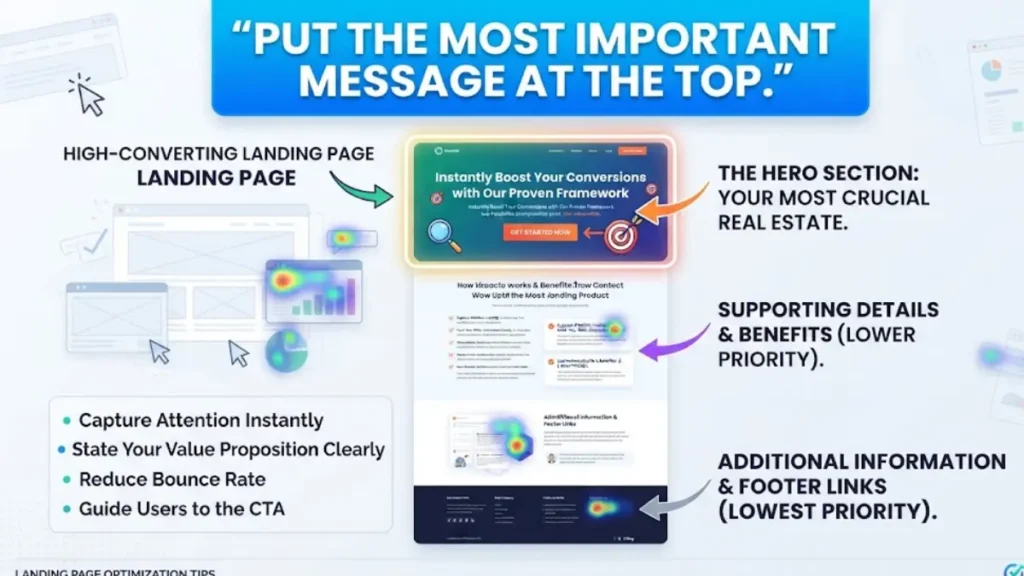
Put the Most Important Message at the Top
Visitors shouldn’t need to scroll through half the page to understand what the business does.
The opening section should quickly communicate the service, location, main benefit, and next step.
For example:
Residential HVAC Repair in Austin
Fast, professional repair for homeowners experiencing heating or cooling problems.
Then give visitors an obvious way to contact the company.
This follows an important principle found across effective landing page design: the visitor should understand the offer quickly instead of decoding clever marketing language.
Build the Page Around Useful Information
One of the key elements of an effective landing page is relevance.
Don’t write paragraphs simply because the page needs to be longer. Answer the questions that would normally come up before someone hires the business.
Explain what the service includes, who it is for, what customers can expect, and how the process works.
If the service is expensive or complicated, visitors may need more detail before contacting you. If the decision is simple, excessive copy may create unnecessary friction.
The right length depends on the customer and the decision they are making.
Make the Page Easy to Scan
Most visitors don’t read every sentence from top to bottom.
They look for the information that answers their immediate question.
Use descriptive subheadings, short paragraphs, relevant images, and clear sections. Important information should be easy to find without forcing visitors through a wall of text.
This is one of the basic landing page elements that affects both usability and conversion.
A clean page can still be detailed. The difference is that the information has been organized for someone who is actually trying to make a decision.
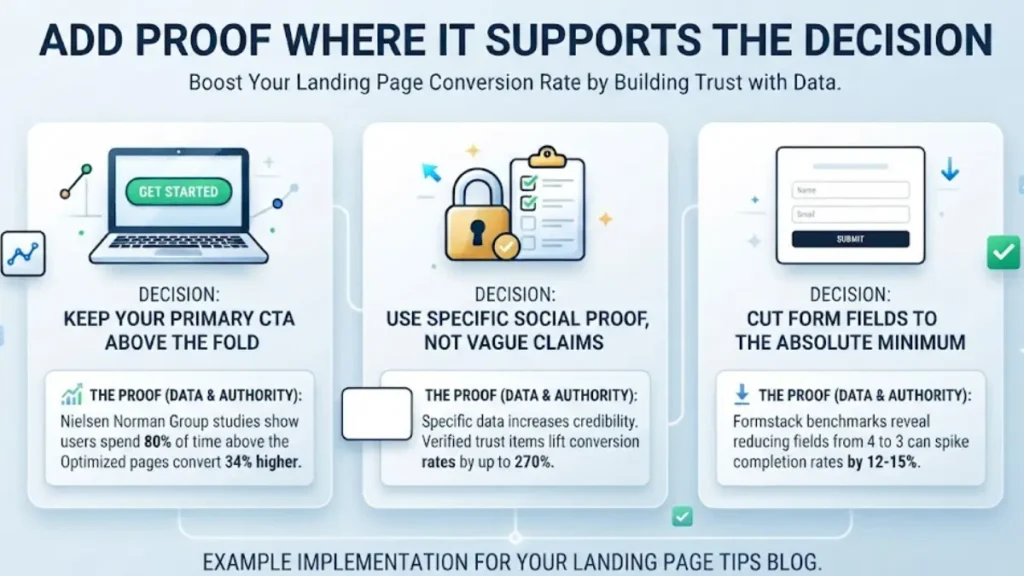
Add Proof Where It Supports the Decision
Local customers often want reassurance before contacting an unfamiliar company.
That makes reviews, testimonials, project examples, certifications, and relevant experience valuable additions.
The important word is relevant.
A testimonial about a specific service is more useful on that service page than a generic statement saying the company is “great.”
If the business has completed notable work in the target area, explaining that experience can also make the page more credible.
This is particularly important for local companies competing against businesses that already have strong recognition.
Make Local SEO Support the Page, Not Control It
Local SEO landing page optimization should improve relevance without making the writing unnatural.
Use the main service and location naturally in important areas such as the page title, headline, URL, copy, and relevant headings. But don’t repeat the city name in every paragraph.
Search engines need context, but customers need readable content.
Internal links can also help connect a location page with related services, supporting articles, and other useful resources across the website.
A well-structured page gives both visitors and search engines a clearer understanding of what the business offers.
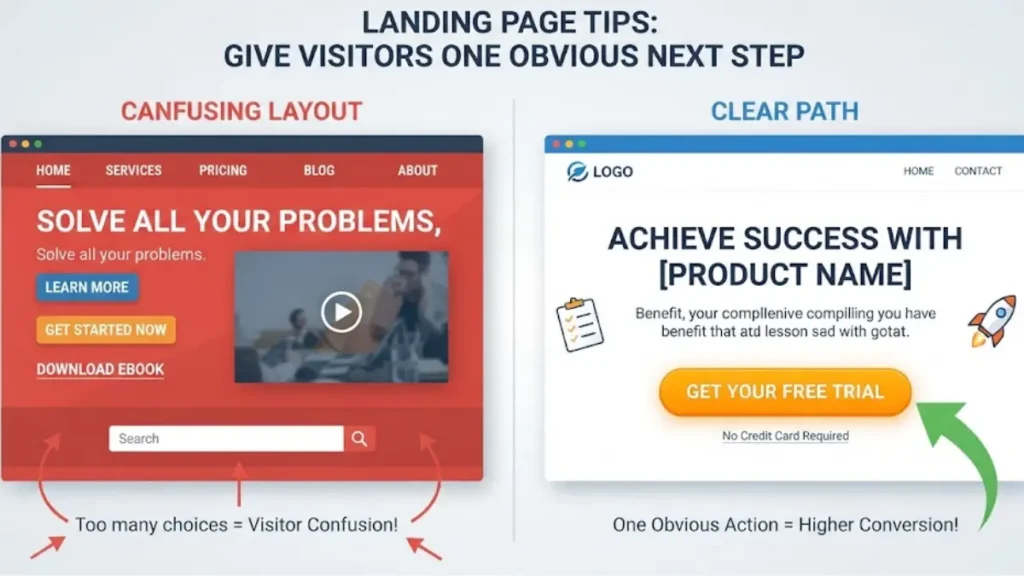
Give Visitors One Obvious Next Step
A landing page shouldn’t leave visitors wondering what to do after reading it.
The primary action could be requesting an estimate, scheduling an appointment, calling the business, or submitting an enquiry.
The CTA should match the customer’s stage of decision-making.
Someone searching for emergency service may want to call immediately. Someone comparing professional services may first want to request more information.
The page can offer secondary options, but one action should remain clearly more important.
Research on conversion-focused landing pages similarly stresses clear calls to action and making the desired next step easy to find.
Keep Mobile Visitors in Mind
A local customer may discover the page while standing outside a property, sitting in a parking lot, or dealing with an urgent problem.
That makes mobile usability particularly important.
The page should load efficiently, text should be comfortable to read, buttons should be easy to tap, and contact options shouldn’t require unnecessary scrolling.
A beautiful desktop layout isn’t enough if the mobile experience makes contacting the business difficult.
Connect Supporting Content to the Landing Page
A strong landing page doesn’t have to do all the SEO work alone.
Related blog content can support it by answering questions around the service.
For example, a roofing company could publish articles about roof repair warning signs, seasonal maintenance, or choosing between repair and replacement. Those articles can naturally link to the relevant service page when the connection is useful.
This creates a logical relationship between informational content and commercial pages.
It can also help visitors move from research to action without forcing them into a sales pitch.
Handle Reviews and Trust Information Carefully
Reviews can strengthen a landing page, but businesses should be careful about treating reputation management as a shortcut.
If a company has negative feedback, the answer isn’t to hide legitimate criticism. Businesses should respond professionally and use recurring complaints to improve the customer experience.
If you’re wondering can you remove reviews on Google, businesses generally cannot simply delete reviews because they are negative. Google says reviews can be reported when they violate its policies, while legitimate negative feedback may remain.
For positive customer feedback, businesses can also use a Google review link to make it easier for customers to access the review process.
The landing page itself should use genuine reviews and testimonials rather than exaggerated claims.
Test the Page After It Goes Live
Publishing a landing page isn’t the end of the process. Look at what visitors actually do.
Are people reaching the CTA? Are they leaving quickly? Are enquiries coming from the intended location? Is one section receiving attention while another is being ignored?
The answers can reveal where the page needs improvement.
Landing page effectiveness should be judged using real behavior and business outcomes, not simply by how attractive the page looks.
Testing headlines, CTAs, page sections, forms, and messaging can help identify improvements over time. Research from Intercom and BrightEdge also highlights measurement and iteration as important parts of landing page optimization.
When Should You Get Professional Help?
Creating one good local landing page is very different from managing a website with dozens of services and locations.
As the site grows, businesses have to think about page overlap, internal linking, search intent, technical indexing, conversion paths, and whether each location page provides something genuinely useful.
That is where professional support can save time.
An experienced SEO professional can review existing pages, identify weak areas, research local search behavior, and determine which pages deserve improvement instead of simply recommending more URLs.
Rank Locale can help businesses approach local landing page optimization from both the search and conversion side, with a focus on building useful pages rather than producing pages simply to increase the site’s URL count.