Choosing an SEO provider is not simply a matter of comparing monthly packages or counting how many services an agency offers. The better decision starts with understanding how people discover your business.
A company serving customers in a specific city has different search requirements from a business selling products nationwide.
A dental practice needs to reach prospective patients who can visit its office, while a software company may be interested in customers across multiple markets.
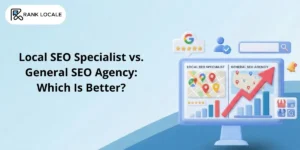
This is why the difference between a Local SEO Specialist and a general SEO agency deserves careful consideration.
A local specialist focuses heavily on geographic search behavior, location relevance, local business visibility, and the customer journey from nearby search to inquiry.
Neither approach is automatically better. The right choice depends on your business model, target market, competition, and the type of customers you want to attract.
Where Local SEO Fits Into the Customer Journey
Someone searching for a nearby contractor, dentist, clinic, electrician, or professional service may already have a specific need. They may be comparing providers, checking reviews, looking at available services, or deciding whether to make contact.
A specialist considers how the business appears across the local search ecosystem and whether the information presented to potential customers is accurate, useful, and convincing. Website content, location pages, business information, reviews, service descriptions, and conversion paths all contribute to the experience.
A near me SEO strategy, for example, should not depend on repeating “near me” throughout a website. The stronger approach is to establish genuine relevance for the areas a business serves and make that information clear to both users and search engines.
This can be particularly important for service-area businesses. A company may not have a physical office in every community it serves, but its website should clearly communicate its legitimate service coverage without creating misleading location pages.
For businesses where geography directly affects purchasing decisions, specialized local knowledge can therefore be valuable.
When a General SEO Agency Has the Advantage
A general SEO agency may be more suitable when the primary objective is to reach a large audience that is not strongly dependent on location.
For example, an ecommerce company may need extensive product and category optimization. A software company may need technical SEO, content development, and international visibility. A publisher may need a large-scale topical content strategy.
In these cases, broader capabilities can be useful because the SEO challenge extends well beyond local search.
This is where local SEO vs global SEO becomes an important distinction. Local campaigns focus on geographic relevance, while broader strategies can target national or international audiences.
Some companies need both. A growing business could use broader content to establish authority while developing localized strategies for individual markets. This is one reason local and international SEO should not always be viewed as competing approaches.
The important question is whether the agency understands how each part fits into the company’s wider customer-acquisition strategy.
A large service menu does not automatically make an agency better. The services still need to solve the problems that are preventing the business from reaching valuable searchers.
Industry and Competition Should Influence Your Decision
A local contractor competes differently from an online retailer. A dental practice has different search behavior from a SaaS company. A law firm may depend heavily on location-specific searches, while an information-based website may have a much broader audience.
For example, a general contractors SEO agency may understand construction-related searches, project types, and customer concerns. However, local expertise may still be necessary when the company competes across specific cities and service areas.
Likewise, a general dentistry SEO agency may understand dental terminology and treatment-related searches, but a practice also needs to compete for patients within its realistic geographic market.
Industry knowledge is therefore helpful, but it should never replace market-specific research.
Before choosing a provider, consider the following:
- Geographic dependency: How important is location when customers choose your business?
- Customer intent: Are searchers researching, comparing providers, or looking for a business they can contact now?
- Competition: Are competitors winning visibility in the locations and services that matter most?
- Expansion plans: Will you remain local, expand regionally, or target broader markets?
- Business value: Which search actions actually contribute to revenue calls, appointments, bookings, inquiries, or quote requests?
These questions can reveal whether you need a highly localized strategy or broader SEO capabilities.
What Separates a Strong SEO Provider From a Generic One?
The label attached to an SEO provider is less important than the quality of its thinking.
A company may describe itself as a top SEO expert, while another may call itself a full-service agency. Neither description proves that the provider understands your business.
Look for evidence of strategic thinking.
A capable SEO professional should want to understand your customers, services, competitors, existing website, target locations, and commercial objectives before recommending major changes.
The provider should also explain how success will be evaluated. Rankings can provide useful information, but they should not be the only metric that matters.
For a local business, meaningful outcomes might include relevant website visits, qualified phone calls, appointment requests, quote submissions, or other actions showing genuine customer interest.
When evaluating seo agencies general, ask whether their process is adapted to your circumstances or whether every client receives essentially the same campaign.
Good SEO also requires patience and transparency. No responsible provider can guarantee a specific Google position, instant traffic, or a fixed number of leads. Search visibility changes according to competition, demand, website quality, technical health, content usefulness, authority, and many other factors.
That is why realistic expectations are part of professional SEO.
Custom Strategy Matters More Than a Long Service List
One of the strongest signs of a thoughtful SEO provider is its willingness to build a strategy around the business instead of selling every available service.
Custom SEO does not mean creating a completely different SEO process from scratch every month. It means prioritizing work according to the site’s condition, market opportunities, customer behavior, and business goals.
For one company, technical improvements may be the first priority. Another may need stronger service pages. A third may have a technically sound website but weak local relevance and poor conversion paths.
The same principle applies to search optimization services. Businesses should not assume that every available service needs to be purchased.
An effective campaign should answer three practical questions: What is limiting visibility now? Which opportunities are most commercially valuable? What work can realistically improve the situation?
This approach is also important when evaluating providers focused on selling SEO services. A persuasive sales presentation is not enough. The strategy should make sense after the sales conversation is over.
How Local SEO Can Support Better Leads
A thousand visitors who cannot become customers may be less valuable than a smaller number of people actively searching for the services the business provides.
This is why local SEO leads should be considered alongside impressions, rankings, clicks, and engagement.
A strong local campaign should make it easier for relevant searchers to understand what the business offers, where it operates, why it may be appropriate for their needs, and how to contact it.
A useful service page should not simply contain keywords. It should answer customer questions, explain the service clearly, establish credibility, and provide an obvious next step.
The same principle applies to local landing pages. They should provide genuine value about the service and market rather than existing solely to capture a geographic phrase.
When SEO and the customer experience work together, organic visibility has a better chance of producing commercially useful visits.
How to Choose Between a Specialist and a General Agency
The decision becomes clearer when you match the provider’s strengths with your growth model.
A Local SEO Specialist is usually worth prioritizing when most customers come from defined cities, neighborhoods, or service areas. Specialized knowledge can be particularly valuable when local competition is strong and customer decisions depend heavily on proximity.
A general SEO agency may be more appropriate when your audience is geographically broad, your website is large or technically complex, or your growth plans involve ecommerce, national visibility, or international markets.
There is also a middle option: choosing a provider with strong local SEO expertise alongside broader SEO capabilities. This can make sense for companies that depend on local customers today but expect to expand into additional markets.
Before making a decision, look beyond package names and monthly deliverables. Ask how the provider would research your market, identify opportunities, prioritize work, measure meaningful outcomes, and adjust the strategy as evidence develops.
Frequently Asked Questions
Often, yes, particularly when customers come from specific cities or service areas. The value depends on how strongly location influences the customer's decision.
Yes. Many general agencies offer local SEO. The important consideration is whether they have sufficient local expertise and can create a strategy specifically suited to your market.
Local SEO focuses heavily on geographic relevance and customers within defined markets. Broader SEO can target audiences across larger regions without relying primarily on physical proximity.
Review its experience, strategic process, reporting approach, communication, industry understanding and ability to explain how its recommendations relate to your business objectives.
Rankings can be useful indicators, but qualified inquiries, calls, bookings and other meaningful customer actions are generally more valuable for evaluating commercial SEO performance.
Conclusion
The question is not whether a Local SEO Specialist is universally better than a general SEO agency. The real question is which provider understands the way your customers search and make purchasing decisions.
If your business depends on customers within defined geographic areas, specialized local expertise can provide a more focused approach. If your audience extends across larger markets, broader SEO capabilities may be more appropriate.
Rank Locale can help businesses evaluate which direction makes sense based on their market, competition, website, and customer-acquisition goals. To discuss your SEO requirements, contact Rank Locale at +1 302-558-4901.
The goal is not to purchase the biggest SEO package. It is to invest in the search strategy that best connects your business with the people most likely to become customers.