When someone searches Google for a nearby service, they usually have a specific problem they want to solve. They may need a company they can contact, a service they can trust, or an answer that helps them decide what to do next. For local businesses, appearing when those searches happen can turn online visibility into real customer opportunities in denver.
But getting into Google local results is not simply a matter of adding a city name to your website or publishing more blog posts. A strong local presence depends on whether Google can understand what your business does, where it operates, and how closely it matches what a searcher needs.
If your business is struggling to appear in relevant searches, the solution is usually not to add more keywords everywhere. A better approach is to identify the weaknesses in your current local presence and improve them systematically.
Start by Finding Why Your Business Is Not Visible
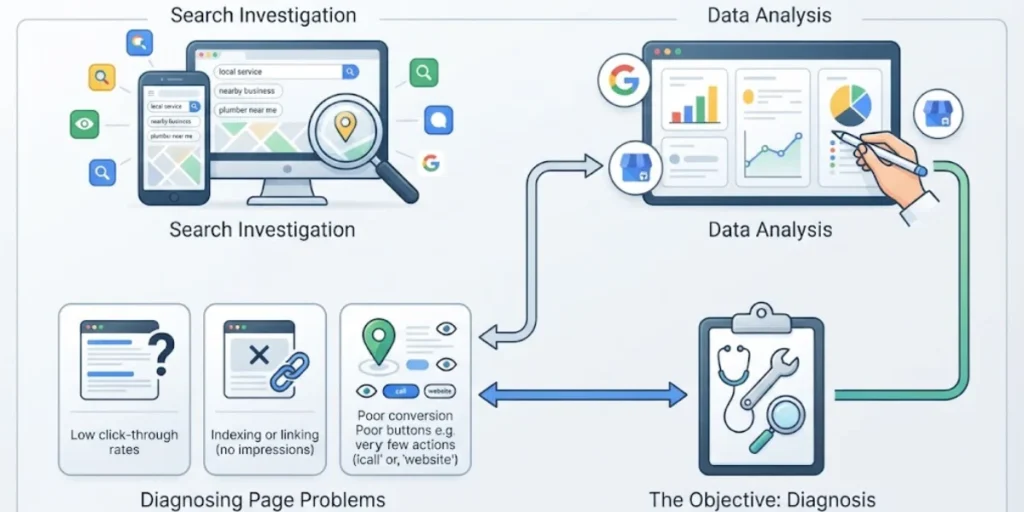
Before changing your local SEO strategy, find out what is actually happening.
Search for your main services using different variations of the queries your customers might use. Look at your business profile, important service pages, and the information customers see across the web.
Then use your available performance data to investigate further. Google Search Console can show which queries generate impressions and clicks for your website. Your Google Business Profile can provide information about how customers discover and interact with your listing.
This helps separate different problems.
A page receiving impressions but very few clicks may need a clearer title or description. A service page receiving almost no impressions may have a relevance, content, indexing, or internal-linking problem. A business profile receiving visibility but few customer actions may need clearer service information or a better website experience.
The objective is to diagnose the problem before making changes.
Understand What Google Uses for Local Results
Google explains local results around three core concepts: relevance, distance, and prominence. Understanding these gives businesses a practical framework for improving their presence.
Local factor | What it means | Practical focus |
Relevance | How closely the business matches the search | Accurate categories, services, and useful content |
Distance | How close the business is to the searcher’s location or specified area | Accurate business location and eligible service-area information |
Prominence | How well-known and established the business appears online | Genuine reviews, relevant mentions, links, and strong website content |
These factors do not operate independently. A business can be highly relevant but physically distant from a searcher, while another nearby business may not offer the service being requested.
This is why local SEO should focus on accurately representing the business rather than attempting to manipulate one individual ranking factor.
Make Your Google Business Profile Complete and Accurate
Your Google Business Profile is one of the most important places for potential customers to learn about your business from Google.
Begin with the fundamentals. Check your business name, address, phone number, website, opening hours, and primary category. The information should accurately represent your real-world business.
Choose the most relevant primary category rather than selecting one simply because it has a desirable keyword. Add additional categories only when they genuinely describe your business.
Your profile description should explain what you do and who you help in natural language. Use your actual services rather than filling the description with repeated search phrases.
Add genuine photographs that help customers understand your business, products, team, location, or completed work. Keep the profile updated when your hours, services, or contact details change.
If you operate as a service-area business, make sure the profile follows Google’s requirements for representing service areas. Do not create misleading locations simply to appear in additional areas.
Good Google Business Profile optimization is primarily about accuracy, relevance, and usefulness.
Build Service Pages Around Real Customer Problems
Your website should support the information provided in your business profile.
One of the biggest mistakes businesses make is creating a generic services page that briefly mentions everything they offer. A potential customer may still have unanswered questions after reading it.
Instead, build useful pages around important services when those services deserve their own explanation.
A strong service page can explain:
- What the service is and what problem it addresses.
- Which customers may need it.
- What the process generally involves.
- What factors can affect the service.
- Why the customer should contact the business.
- What information the customer should prepare before requesting assistance.
This creates content that serves a real purpose instead of existing only to target a keyword.
For example, a company offering local SEO can have separate, useful pages for Google Business Profile optimization, local search audits, citation management, and local content strategy when each service has a distinct customer need.
The important point is that every page should have its own reason to exist.
Use Local Keywords Without Making the Content Sound Forced
Keywords still help communicate the subject of a page, but they should fit naturally into useful writing.
Instead of repeating a phrase such as local SEO services throughout an article, use related language that reflects the broader topic. A natural page may discuss Google Maps visibility, business profiles, local search optimization, reviews, service pages, and customer inquiries without forcing the same phrase into every section.
Think about how customers describe their problems rather than simply collecting variations of one keyword.
Someone may search for:
- Why is my business not showing on Google Maps?
- How can I improve local visibility?
- How do I optimize my business profile?
- Why do competitors appear above my business?
- How can customers find my service nearby?
These searches represent different ways of expressing a similar need. Useful content should answer the underlying problem rather than mechanically repeating exact-match phrases.
Earn Trust Through Genuine Customer Reviews
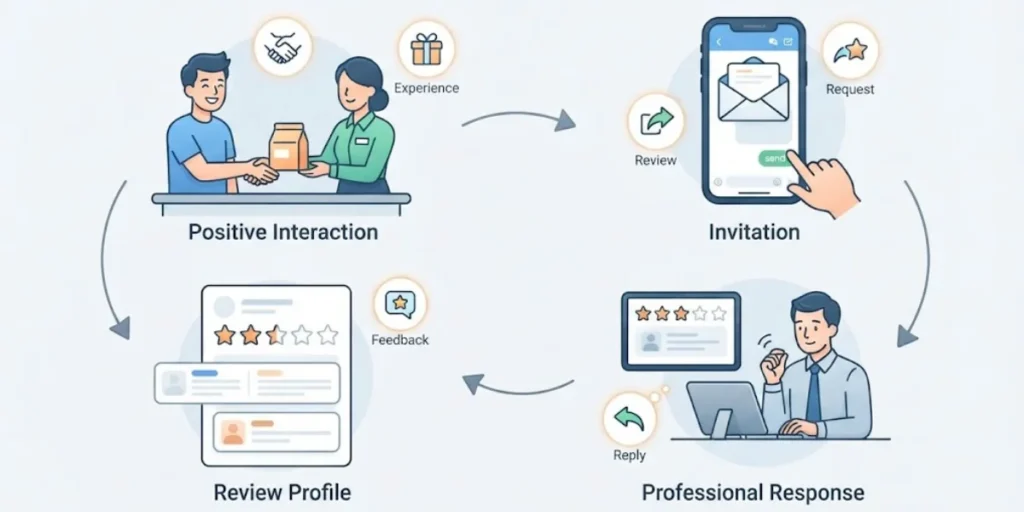
Reviews can influence how potential customers perceive a business and contribute to its online reputation.
Create a simple process for asking genuine customers to share their experiences. A follow-up email, message, or review link can make the process easier.
The important word is genuine.
Do not purchase reviews or create artificial feedback. Do not pressure customers into leaving only positive reviews. A trustworthy review profile comes from real customer experiences.
Respond to reviews professionally. Thank customers who leave positive feedback, and address concerns raised in negative reviews constructively. If a specific problem requires private discussion, provide an appropriate way to continue the conversation.
Reviews should not be treated only as an SEO activity. They are also valuable information for people deciding whether to contact your business.
Make Your Website Easy for Google and Customers to Use
Local visibility can bring visitors to your website, but the website still needs to do its job.
Check whether important pages are accessible to search engines and users. Make sure important service pages are not accidentally blocked from indexing and that internal links connect related content.
Mobile usability deserves particular attention because local searches frequently happen when people are away from a desktop computer. Visitors should be able to read your content, navigate the website, and contact your business without unnecessary difficulty.
Review page speed, image sizes, scripts, redirects, broken links, and other technical issues that may affect usability.
Also make your contact information easy to find. If someone has searched for a local service and reaches your website, they should not have to search through several pages to discover how to request help.
Technical SEO is most valuable when it improves accessibility and the user experience at the same time.
Build Local Authority Naturally
Your website is not the only place where Google and customers can find information about your business.
Relevant business directories, professional organizations, industry websites, local publications, suppliers, and community organizations can provide additional references to your company.
Review important listings to make sure your business name, phone number, website, and other essential information are accurate. Correct outdated information and deal with duplicate listings where appropriate.
For links, focus on relevance rather than quantity. A useful mention from a legitimate industry or local source can be more meaningful than dozens of unrelated directory links.
You can create opportunities for genuine mentions by publishing useful resources, participating in relevant professional activities, contributing expert information, or developing relationships within your industry.
Local authority should develop from real business activity and useful information—not artificial link-building patterns.
Improve Your Google Maps Visibility With Consistent Optimization
Google Maps SEO is closely connected to the overall local presence of your business. Your profile, website, reviews, business information, and reputation all contribute to the information customers can discover.
Start by ensuring that your profile accurately represents your business. Then make sure the services described on your website support the same understanding.
Avoid creating multiple profiles for the same eligible business simply to target different neighborhoods. Instead, build genuine relevance around the areas your business actually serves.
If customers frequently ask questions about service areas, availability, pricing factors, or appointment processes, answer those questions clearly on your website and through appropriate profile information.
The goal is to make your business easier to understand, not simply to create more locations or keyword variations.
Measure What Happens After You Make Changes
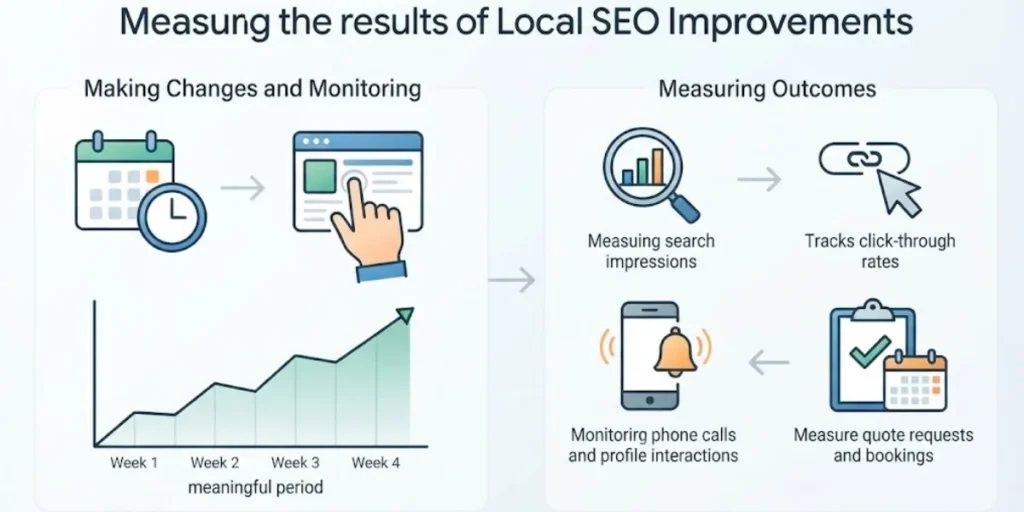
Local SEO should be treated as an ongoing process rather than a one-time task.
After making improvements, monitor your performance over a meaningful period. Look at search impressions, clicks, queries, website engagement, profile interactions, phone calls, quote requests, bookings, and other outcomes relevant to your business.
Do not judge the entire strategy from one ranking position. Local results can vary depending on the searcher’s location, device, query, and other context.
Instead, look for patterns.
If impressions increase but clicks remain low, review how your pages appear in search. If relevant traffic increases but inquiries remain weak, examine the landing page and customer journey. If visibility remains limited, investigate whether the page is targeting the right intent and whether your website has sufficient topical depth and authority.
This approach turns local SEO from guesswork into a measurable process.
When Professional Local SEO Services Make Sense
Some businesses can manage basic local optimization internally. Others have larger websites, multiple services, several locations, technical problems, or limited time to manage their search presence.
Professional local SEO services can help identify weaknesses and organize the work into a practical strategy. This may include a local SEO audit, Google Business Profile optimization, service-page improvements, technical SEO, citation management, content planning, internal linking, and performance analysis.
The important part is not simply hiring someone to add keywords. A useful strategy should begin with an assessment of the business, its customers, competitors, website, and existing search visibility.
For businesses that have already published many SEO articles, an audit can also reveal overlapping topics. Instead of continuously publishing similar pages, existing content can sometimes be improved, consolidated, internally linked, or repositioned around a clearer search intent.
That can create a more organized website where every important page has a distinct purpose.